
The Most Impressive Archaeological Sites
Index
The World's Most Impressive Archaeological Sites
Traveling is a way to discover completely different cultures, landscapes, and ways of life, but few experiences are as transformative as visiting the world’s most impressive archaeological sites. These places, steeped in history and mystery, allow you to delve into vanished civilizations and better understand how humanity, architecture, and the great centers of power of the past evolved. From temples hidden among rainforests to cities that lay buried for centuries, archaeological destinations offer a direct bridge to distant eras that continue to spark deep fascination.
What makes an archaeological site one of the most impressive archaeological sites is usually a combination of factors: its magnitude, its state of conservation, its historical relevance, the technical ingenuity of its builders or the ability to provoke amazement to the visitor. Many of these enclaves have been declared World Heritage Sites by UNESCO, not only for their beauty, but also for their heritage and cultural value for all humanity. Exploring these spaces allows us to travel thousands of years in just a few steps and, at the same time, reflect on the legacy that ancient societies left to future generations.
In addition to cultural attraction, these destinations have become pillars of international tourism. Travelers from all over the world come every year to discover its secrets, photograph its monuments and enjoy experiences that combine adventure, learning and spirituality. That’s why selecting the most impressive archaeological sites involves recognizing iconic places that inspire millions of people and continue to reveal new archaeological finds. Throughout this article we will explore some of the most outstanding sites on the planet, all of them capable of turning a trip into a real historical expedition.


Machu Picchu: the Inca sanctuary among the clouds
Among the most impressive archaeological sites on the planet, Machu Picchu stands out as an incomparable jewel. Hidden among the mountains of Peru, this ancient Inca city attracts travelers every year who are fascinated by its majesty and by the enigma that still surrounds its exact function. Considered one of the New Seven Wonders of the World, Machu Picchu is much more than a postcard: it is a masterpiece of engineering, architecture and harmony with the natural environment.
Built in the 15th century under the reign of Pachacutec, the city is located about 2,430 meters above sea level. Its strategic location made it a ceremonial and possibly astronomical point, as well as a resting place for the Inca elite. Walking through its agricultural terraces, temples and residences allows you to understand how the Incas mastered the art of building on extreme slopes and how they took advantage of the resources of the terrain without altering the harmony of the mountain.
For travelers, visiting this site requires planning. Many choose to arrive via the famous Inca Trail, a multi-day route that allows you to enjoy the natural surroundings while ascending towards one of the most impressive archaeological sites in the world. Others prefer the more comfortable option of the train to Aguas Calientes, from where you can access the entrance of the enclosure. The best time to visit is during the dry season, between April and October, although it is important to book in advance due to capacity control. Without a doubt, Machu Picchu represents an unforgettable experience and a reminder of the powerful Inca legacy.
Petra: the pink city carved into the rock
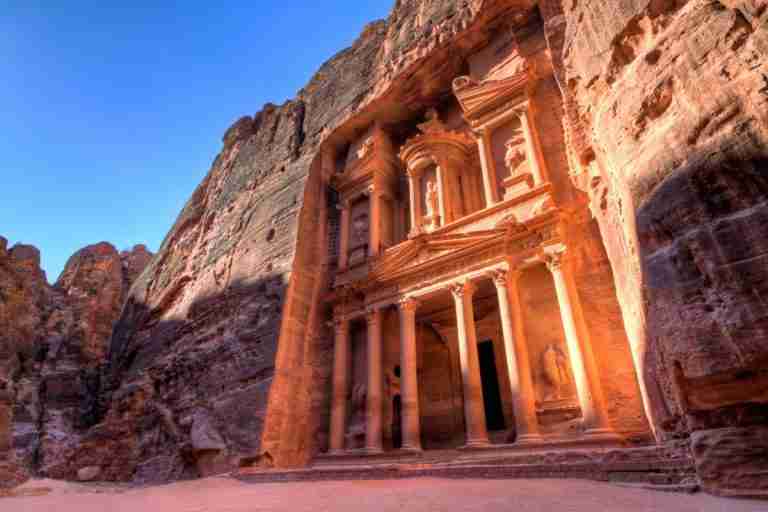
Petra is one of the most impressive archaeological sites in existence due to its location, its history, and its amazing architecture carved directly into the sandstone. Located in the heart of Jordan, this ancient Nabataean city was an important trading center more than 2,000 years ago, where caravan routes carrying incense, spices, and other luxury goods converged between East and West. Its monumentality and its pink color, which changes with the daylight, make this destination a unique visual and emotional experience.
The entrance to the site is through the Siq, a narrow gorge more than a kilometre long that leads directly to the most emblematic façade: The Treasury (Al-Khazneh). This iconic monument, carved with pinpoint precision into the rock, seems to emerge from nowhere and is the most photographed point in Petra. However, the city offers much more. Walking along its paths you can discover royal tombs, temples, dwellings and an impressive theater with a capacity for thousands of spectators. Higher up, after a demanding ascent, is the Monastery (Ad-Deir), another of the city’s great treasures.
Travelers who want to explore Petra in its entirety should dedicate at least one full day, although two or three days are ideal to walk the back roads and enjoy this historic destination calmly. A visit at sunrise or sunset is especially recommended, as the light highlights the reddish tone of the walls. Petra is not only one of the most impressive archaeological sites, but also an outstanding example of the human ability to transform the natural landscape into a monumental work of art.
Pompeii and Herculaneum: cities frozen in time
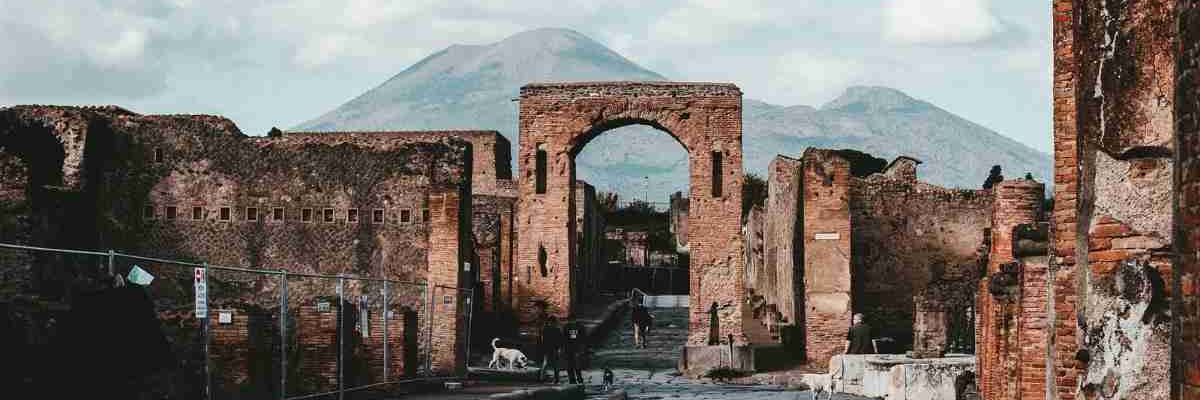
Among the most impressive archaeological sites in Europe are Pompeii and Herculaneum, two Roman cities that were buried by the eruption of the volcano Vesuvius in 79 AD. What the visitor sees today is not a simple reconstruction, but an authentic portrait of life in Ancient Rome, uniquely preserved thanks to the action of volcanic ash. This natural tragedy made it possible to preserve homes, decorations, everyday utensils and even human footprints, which makes these places authentic time capsules.
Pompeii is famous for its size and for the variety of structures that can be visited: from large villas decorated with frescoes to public baths, taverns, temples and mosaics that narrate scenes of daily life. Herculaneum, although smaller, is better preserved, since the layer of volcanic material was denser and allowed organic elements such as wood or charred food to be retained. In both cities, walking through their cobbled streets generates the feeling of having gone back 2,000 years.
These sites represent some of the most impressive archaeological sites because they allow us to understand the day-to-day life of one of the most influential empires in history. For travelers, it is advisable to spend several hours at each site, ideally accompanied by an expert guide who can explain the most relevant findings and customs of the time. The proximity to Naples and the ease of access make it a perfect destination for cultural excursions.
Angkor Wat: the spiritual heart of the ancient Khmer Empire
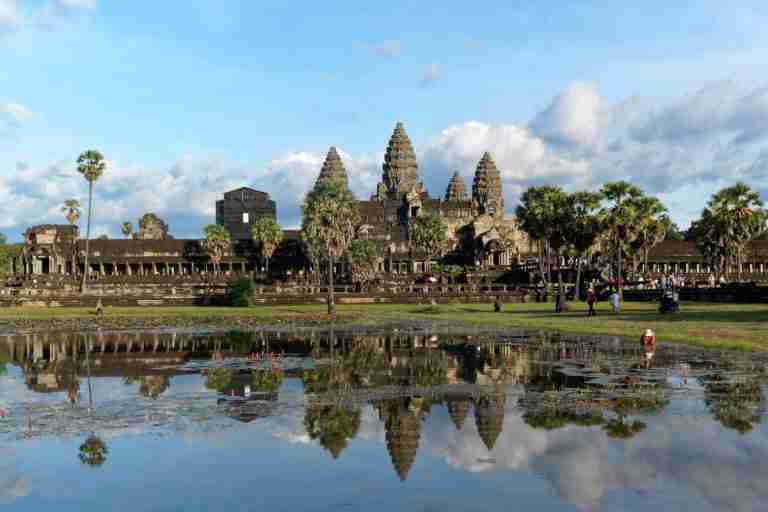
Located in Cambodia, Angkor Wat is one of the most impressive archaeological sites in Southeast Asia and a national symbol that even appears on the country’s flag. This gigantic religious complex, built in the 12th century, is not only famous for its beauty, but also for its amazing engineering and deep spiritual symbolism. Originally dedicated to the god Vishnu, Angkor Wat represents an architectural vision of the universe according to Hindu mythology, with its central towers symbolizing the sacred mountains.
The Angkor complex encompasses hundreds of temples spread across an extensive jungle-covered area, making every visit an exploratory adventure. Among the most popular temples is Ta Prohm, known for the roots of giant trees that hug its walls, creating iconic images that have gone around the world. Another outstanding temple is Bayón, famous for its towers decorated with huge stone faces that watch in all directions.
Touring Angkor Wat at sunrise is one of the most recommended experiences, as the light transforms the silhouette of the temple and creates an unforgettable natural spectacle. Travelers usually spend several days in the area to discover the lesser-visited corners, where the jungle and architecture merge in an almost mystical way. Angkor Wat is among the most impressive archaeological sites both for its spiritual value and for its historical significance to the Khmer Empire, a civilization that dominated much of Southeast Asia for centuries.
Chichén Itzá: the mathematical and astronomical greatness of the Maya
Chichen Itza is one of the most impressive archaeological sites in the Americas and an extraordinary example of the mathematical, astronomical, and architectural knowledge of the Mayan civilization. Its most emblematic structure is the pyramid of Kukulcán, a masterpiece that combines geometric precision with religious symbolism. During the equinoxes, sunlight creates the illusion of a snake descending the stairs, a phenomenon that demonstrates the advanced Mayan understanding of solar movement.
The complex includes numerous buildings of great relevance, such as the Observatory (El Caracol), the largest Ball Court in Mesoamerica, the Tzompantli and the Sacred Cenote, where ritual ceremonies were performed. Each of these spaces offers a distinct perspective on the spiritual, political, and scientific world of the Maya. The magnitude of the place, added to its connection with astronomy, make it an unmissable destination for history lovers.
To visit Chichen Itza optimally, it is recommended to arrive early to avoid the crowds and the strong midday heat. Many travelers combine the visit with a swim in the nearby cenotes, adding a refreshing experience after touring one of Mexico’s most impressive archaeological sites. Declared a World Heritage Site and one of the New Seven Wonders of the World, Chichen Itza is a testament to the Mayan legacy and a must-see destination for those who want to experience the wonders of the ancient world.
Egypt: Pyramids, Temples and Secrets of the Eternal Nile
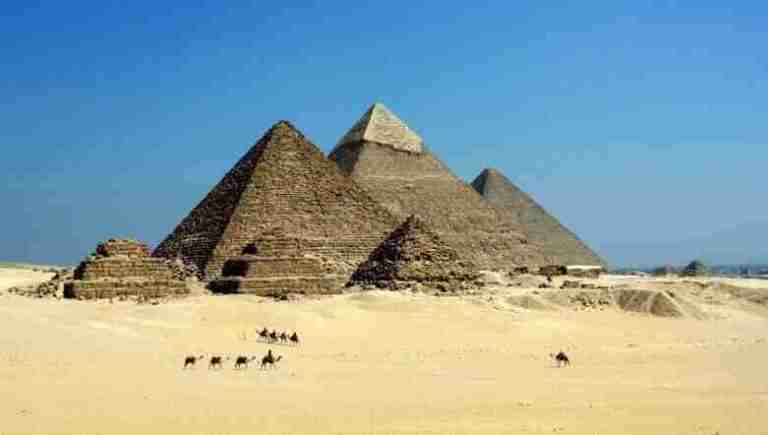
If we talk about the most impressive archaeological sites, Egypt occupies a privileged place thanks to its inexhaustible historical richness. The Pyramids of Giza, with the Great Pyramid as the protagonist, represent one of the most extraordinary architectural works ever built. In addition to these, there are monumental temples such as Luxor, Karnak, Abu Simbel and the mythical Valley of the Kings, where pharaohs such as Tutankhamun rest. Each of these places offers a window into the pharaonic past, an era marked by gods, rituals, and powerful dynasties.
The vastness of Egypt surprises even the most experienced travelers. The scale of the temples, the precision of their hieroglyphics, and the complexity of their burial chambers reflect the extraordinary level of organization and power of ancient Egypt. To visit these places is to immerse yourself in thousands of years of history that have profoundly influenced humanity.
Exploring the country requires planning, as the distances between major cities are considerable. Many travelers opt for a Nile cruise, a comfortable and evocative way to tour the most important temples while enjoying the desert landscape. Others prefer to explore the pyramids and the Egyptian Museum in Cairo before flying south to discover the archaeological treasures of Luxor and Aswan. Without a doubt, Egypt is one of the most impressive archaeological sites, a destination where every stone tells a story and where the past is still alive in every corner.
Conclusion: The Importance of Preserving the Most Impressive Archaeological Sites
The world’s most impressive archaeological sites are not only extraordinary tourist destinations, but also essential testimonies to humanity’s cultural legacy. Every temple, city, or ancient structure that still stands reminds us of who we were, how we evolved as a society, and what were the pillars that shaped modern civilization. These places connect us with our origins and invite us to reflect on the ingenuity, spirituality and creativity of cultures that, despite the passage of time, continue to leave deep traces.
Preserving these enclaves is a collective responsibility. Tourist pressure, climate changes and lack of maintenance can put its integrity at risk, so it is vital to promote sustainable and respectful tourism. Choosing guided tours, following the marked paths and supporting conservation initiatives helps future generations to marvel at these treasures as well.
Planning a trip to any of the most impressive archaeological sites mentioned not only guarantees an unforgettable experience, but also allows you to become part of the living history of those places. Whether hiking the Inca trails of Machu Picchu, exploring the temples of Angkor, or admiring the Egyptian pyramids, each trip becomes a unique opportunity to understand the past and appreciate the grandeur of the world heritage.