
Fly in a hot air balloon over breathtaking landscapes
Index
Why Ballooning Captivates Travelers
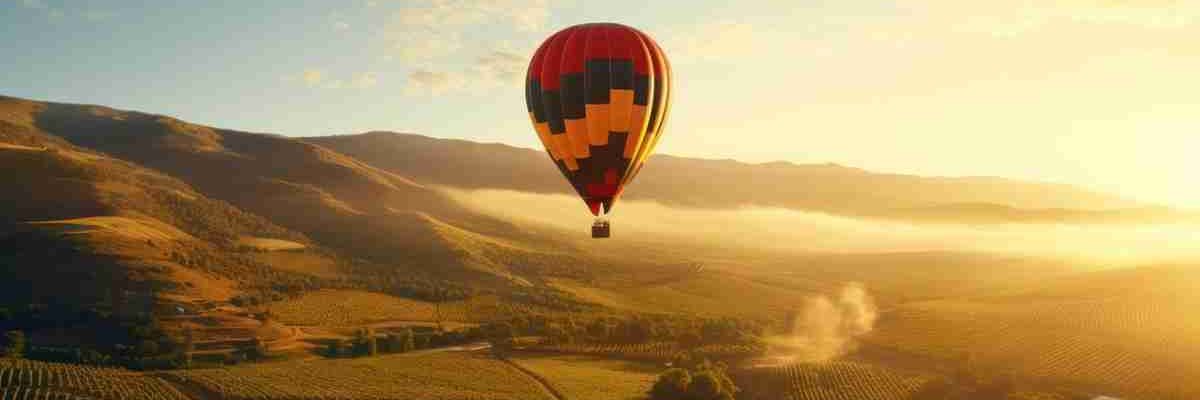
Flying in a balloon is one of those experiences that transform a trip into an indelible memory. Unlike other mediums, it’s a smooth, motorless movement where you let yourself be carried away by the wind as the world unfolds like a map at your feet. In a time of rush, Flying in a Hot Air Balloon invites you to slow down, listen to the silence and let the light of dawn paint the landscape with tones that change minute by minute. The sensation of floating, of being suspended between heaven and earth, brings a new, almost poetic perspective on cities, valleys and deserts.
For nature lovers, Flying in a balloon allows you to observe patterns of the terrain, fauna and vegetation without interfering. Those who seek photography find a natural balcony from which to capture symmetries, long shadows and infinite horizons. And for those traveling as a couple, few moments compete with the romance of a toast at an altitude of 800 meters. Ballooning also arouses cultural interest: in many destinations it is a well-established tradition that is celebrated with festivals and early mornings shared by entire communities.
Beyond the aesthetics, the attraction lies in the ritual: preparations in the dark, the roar of the burner breaking the dawn, the first take-off that you barely perceive and the collective amazement. Flying in a balloon is, in short, traveling with time and the wind as companions.


Best destinations in the world to fly in a balloon
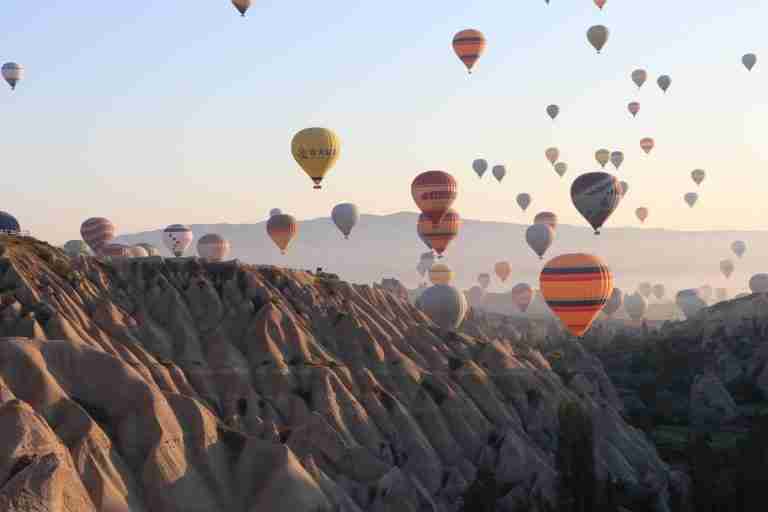
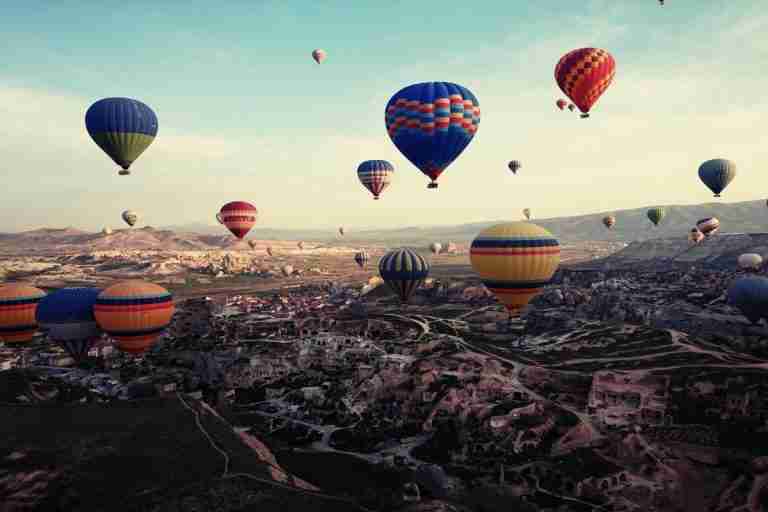
The planet offers exceptional scenarios for Flying in a Balloon. Cappadocia, in Turkey, is perhaps the icon for its fairy chimneys, rolling valleys and cave towns. Dozens of balloons rise at dawn creating a double spectacle: the landscape and the balloons themselves framed by an awakening sky. In the Serengeti, Tanzania, Balloon Flying allows you to watch wildebeest and zebra migrations from a respectful distance, following rivers and golden plains. In Luxor, Egypt, temples and the Valley of the Kings take on another dimension when viewed from the air, with the Nile meandering as an ancestral guide.
In Spain, medieval Segovia with its Roman aqueduct and the wall of Ávila are magnificent settings; Castilian light and patchwork fields shine in spring and autumn. In France, the Loire Valley offers castles and vineyards perfect for ballooning through the morning mists. In Mexico, Teotihuacan surprises with the pyramids of the Sun and Moon rising under the basket. And in the United States, Napa Valley combines vineyards, gentle hills and historic wineries, ideal for a post-flight dining plan.
The list goes on: Bagan in Myanmar with its temples, the Dubai desert with endless dunes, or Lake Bled in Slovenia when the weather permits. The common denominator is the sum of light, relief and culture, elements that make Flying in a Balloon the best way to understand the territory.
The step-by-step experience: from take-off to landing
The magic of Flying in a Balloon begins before dawn. You arrive at the meeting point, sign the liability waiver and watch the inflation: first cold air with fans, then the burner heats up and the fabric comes to life. That moment is hypnotic; The balloon goes from carpet to cathedral in a matter of minutes. You climb into the basket, receive a safety briefing and, almost without noticing it, you move away from the ground. Flying in a balloon does not have the acceleration of an airplane; Take-off is a sigh that awakens smiles.
In flight, the pilot plays with layers of air at different heights to orient the trajectory. There is no rudder; Sailing is based on reading the wind, so each experience is unique. The altitude varies: at low altitude you perceive the aromas of fields and hear dogs barking; Higher up, the landscape is abstracted and silence surrounds you. Flying in a balloon is also an exercise in contemplation: seeing how light shapes mountains, how rivers draw arteries, how the city is arranged in grids.
Landing involves coordination. The pilot looks for a clearing, warns of safety posture and, if there is a breeze, the basket can drag a few meters. No panic: it’s part of the script. Often the flight culminates with a commemorative toast or certificate, a widespread tradition in many countries. All in all, Flying in a Balloon is remembered as a complete ritual: assembly, float and return to land with the feeling of having experienced something that the clock cannot measure.
Security and operators: how to choose well
Safety is the cornerstone for Flying in a Hot Air Balloon. Start by choosing certified companies, with valid licenses and pilots with demonstrable flight hours. Ask about the age and maintenance of the equipment, weather protocols, and cancellation policy. A good operator cancels if the wind exceeds safe thresholds, if there is shear, or if visibility is insufficient. Weather rigor is the most important filter to make Flying in a Hot Air Balloon a memorable experience for the right reasons.
Check passenger-per-basket ratios: fewer people tend to mean better experience and communication with the pilot. Also evaluate the previous briefing: it should include landing position, location of handles, prohibition of taking bodies out of the basket and what to do if the basket lies down. Ask about insurance coverage, both for civil liability and for passengers. Flying in a balloon with serious companies means transparency in all of the above.
Look out for quality signs: tracking vehicles equipped with GPS, radio communication, visible checklists and a coordinated ground team. Recent reviews, especially those describing climate-responsible cancellations, say more than a thousand sunrise photos. Remember that aggressive discounts can hide operations that save on maintenance or training. When in doubt, prioritize reputation over price. The rule is simple: to fly in a balloon safely, choose professionals who put “do not fly” first when the conditions are not suitable.
Best time of year and ideal climate
The weather rules when it comes to Flying in a hot air balloon. Most flights take off at dawn because the atmosphere is more stable: fewer thermals, light winds, and incomparable light. In warm climates, there may also be sunset departures. The best time depends on the destination: in Cappadocia, spring and autumn offer clear skies and moderate breezes; in Segovia, the months of April to June and September to October balance temperature and stability; in deserts, winter gives cold and dense air, perfect for flying in a balloon with clarity.
Ideal conditions include sustained wind below 15 km/h, absence of nearby storms, low shear and wide visibility. Cloud cover is not an enemy if it is high and stable; Low clouds, fog or intense convection can cancel operations. The best operators consult various weather models and on-site observations. If they call you to reschedule, it’s a good sign: they prioritize safety.
Plan with margin. Book your flight at the start of your trip in case you need to retry another day. Dress in layers: mornings can be cold even in summer. And remember: Flying in a hot air balloon is not a guaranteed product against the weather, it is an activity that is done with the weather as an ally. Accepting that reality will allow you to enjoy more when the sky and the wind say yes.
What to bring and how to prepare
Proper preparation enhances the Balloon Flying experience. Start with footwear: wear boots or closed sneakers with non-slip soles; You’ll land on fields, not carpets. Dress in layers and wear a light jacket even in summer; at dawn it can cool down. A hat or cap helps protect you from the heat of the burner, and a broad-spectrum sunscreen prevents surprises when the sun peeks out. Thin gloves can be helpful if you’re cold toothed.
Bring water and, if you’re prone to hunger sickness, a light snack before heading out. Avoid alcohol the night before. Keep a phone case and camera strap handy: during Balloon Flying you don’t want to lose equipment due to a sudden movement. If you are traveling with children, check the minimum height required by the operator; If you’re pregnant or have cardiovascular conditions, consult your doctor and provider first.
He arrives on time at the meeting point; The dawn does not wait. Listen to the briefing and follow the instructions to the letter, especially the landing posture. Avoid bulky backpacks that get in the way of the basket. And finally, get your mind in mind: Flying in a balloon is letting yourself go; There is no fixed or exact route, and that unpredictability is part of the charm. Going with flexible expectations will allow you to enjoy every minute in the air more.
Budgeting, insurance and sustainability
The cost of Balloon Flying varies by destination, duration, and basket size. Generally speaking, shared flights of 45 to 75 minutes range from medium to high fares, while private flights double or triple the price. Ask what is included: transportation to the take-off point, toast, breakfast, photos or certificate. Consider paying a little more for operators with a solid reputation; in the end, ballooning is an activity in which safety and service justify the investment.
In insurance, check passenger coverage and liability. If you travel with travel policies, check exclusions for air activities; some require supplements. Keep written confirmations and read weather cancellation refund policies.
Regarding sustainability, the balloons use propane; The impact is less than that of heavy aircraft, but it exists. Offset your footprint by supporting local reforestation projects, choosing companies that optimize consumption, and promoting responsible practices. The committed operators minimize support vehicles, recycle materials and work with communities so that tourism generates decent employment. In addition, they prioritize schedules and altitudes that do not disturb sensitive fauna. In short, ballooning can be integrated into a more conscious trip if you choose well and balance pleasure, safety and responsibility.
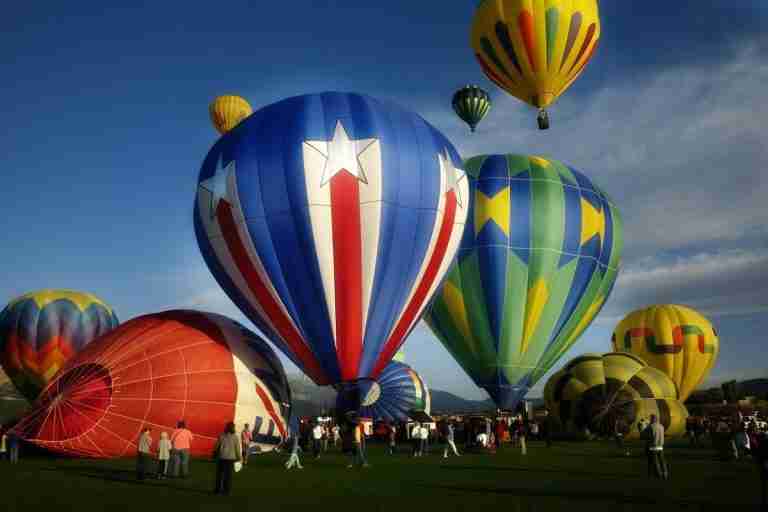
Photography tips and on-board etiquette
Those who love the image find in Flying in a Balloon a laboratory of light. Shoot at dawn with low ISO and minimum speed of 1/2501/250 if it’s breezy; Use aperture priority to control depth of field and keep stabilization on. A versatile lens (24-70mm in full frame, 16-50mm in APS-C) covers landscapes and details. Polarizer with care: can darken corners and complicate grazing light exposures. For video, 4K at 24-30 fps and long shots that breathe with the landscape. And don’t forget to spin: the world isn’t just ahead.
In etiquette, the rule is simple: security and cooperation. During Balloon Flying do not support teams on the edge, do not invade the pilot’s space and alternate positions so that everyone can enjoy views and photos. On landing, he stows cameras, bends his legs, and holds handles. Avoid music without headphones; Silence is part of the charm. If you post, tag the operator and the destination: you help local economies and other travelers find reliable references.
Plan your shots: first wide landscape, then layers and textures, then burner details, shadows of the globe on the ground, and finally, sidelight portraits. A neutral-colored blanket can serve as a background for objects. And, above all, remember that Flying in a balloon is experience before photo: put the camera down for a few minutes and let the memory do its work.